
Treatment
Treatment
About 15% of individuals are capable of independently clearing the virus from their bodies without medical intervention. However the majority of patients do need treatment to help combat the disease.
Unlike hepatitis A and B, there is no vaccine for the treatment or prevention of hepatitis C. Treatment involves combination therapy and many factors are taken into account before a course is decided on. The infection is successfully cleared in approximately 50% of patients.
Currently an injection of pegylated interferon alpha (brand names Pegasys and PEG-Intron) and the antiviral drug ribavirin are used to treat hepatitis C. They are taken for a period of 24 or 48 weeks, depending on the viral genotype. Progress is assessed by carrying out liver function tests and HCV-RNA tests and comparing results from before, during and after treatment.
Commonly, vaccinations against hepatitis A and B will be strongly recommended to hepatitis C patients as part of their treatment. Exposure to either virus, if it has not been previously encountered would be detrimental to their health as it causes rapid progression of liver disease.
There are other factors which are known to influence the progression of hepatitis C and where possible, attempts should be made to minimise their impact.
- Age – older patients will have a more rapid progression
- Gender – males are more likely to be adversely affected
- Alcohol consumption – increases the rate of fibrosis and cirrhosis thus causing faster deterioration
- HIV co-infection – dramatically influences liver degeneration
- Fatty deposits in liver – reduces liver function thus increasing disease progression.
If hepatitis C is diagnosed and treatment started during the acute phase of the disease, there is a much higher success rate (more than 90%) and better prognosis for the patient. Low initial viral loads (less than 2 million virions/ml) also correlate with improved chances of a good response to treatment.
There are side-effects associated with current treatment. These range from mild flu-like symptoms to anaemia, cardiovascular events and sometimes suicidal tendencies.
Besides conventional treatment, there are several alternative therapies available. These include extract of Silybum marianum and Sho-saiko-to which claim to maintain hepatic function and provide some generic antiviral effects.
There are new drugs being developed to treat hepatitis C more effectively:
- Viramidine is a prodrug of ribavirin which is currently in phase III clinical trials and has shown improved targeting to the liver. It is intended for use in conjunction with interferons.
- Protease and polymerase inhibitors
- Albuferon
- Zadaxin
- DAPY
- Immunoglobulins – limited use in transplant patients
- Triple therapy with amantadine (Symmetrel) has shown some improvement in patients who have not responded well to previous treatment.
Prevention
As hepatitis is not easily treatable, it is better to prevent the spread of the disease. This can be achieved by following these guidelines: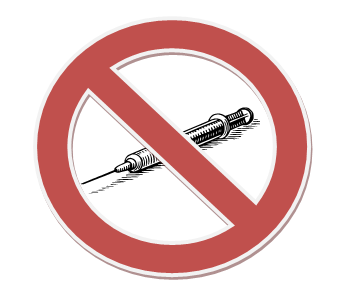
- Avoid sharing needles and other drug paraphernalia
- Ensure equipment used for tattoos and body piercing is completely sterilized and disposed of appropriately
- Equipment used for medical and dental procedures involving blood contact should have standardised sterilization and disposal techniques.
- Do not share personal hygiene items such as razors, toothbrushers and scissors
- Only use condoms tested to national standards and displaying the kite-mark; make sure they are worn correctly before commencing sexual activities
- Follow safety guidelines if your line of work is likely to involve exposure to blood
There have been several initiatives set up to improve transmission rates not specifically for hepatitis C but of blood-bourne diseases in general. These include better awareness and knowledge of such diseases, improved access to screening programs, needle-exchanges and education about drug injection procedures.
Hepatitis C treatment: Video courtesy of YouTube