
Diagnosis
Symptoms
60-70% of people who contract HCV are initially asymptomatic with viral loads in blood plasma of 100/ml - 50,000,000/ml. In the acute phase of the disease any symptoms that do occur tend to be non-specific and may include:
- Fatigue
- Joint pains and muscle aches
- Loss of appetite
- Nausea
- Flu-like symptoms - fever, headaches, sweats
- Anxiety
- Sleep disturbances
- Cognitive changes – depression and mood swings
- Alcohol intolerance
- Abdominal pain
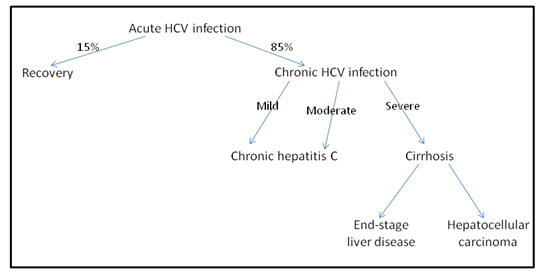
The chronic form of hepatitis C may also have no obvious symptoms. Liver biopsies show inflammation in the majority of patients although the amount of fibrosis present can vary significantly.
Approximately 20% of people with hepatitis C develop cirrhosis of the liver over a period of 20 years or more. Resultant symptoms are caused by reduced liver function or portal hypertension (increased pressure in liver circulation):
- Ascites
- Susceptibility to bruising and bleeding
- Ostealgia
- Varices
- Steatorrhea
- Jaundice
- Hepatic encephalopathy
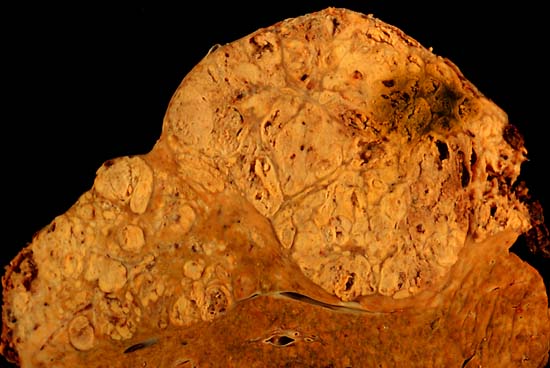
Severe liver damage caused by HCV can lead to hepatocellular carcinoma or complete liver failure.
Diagnosis
The diagnosis of hepatitis C is made difficult by the lack of distinct symptoms and so is rarely diagnosed during the acute phase. Advanced liver failure produces recognisable symptoms but this is often restricted to much further on in the course of the disease. Diagnosis occasionally occurs from targeted screening following blood donation, contact tracing or as a result of thorough analysis of a patient’s medical history.
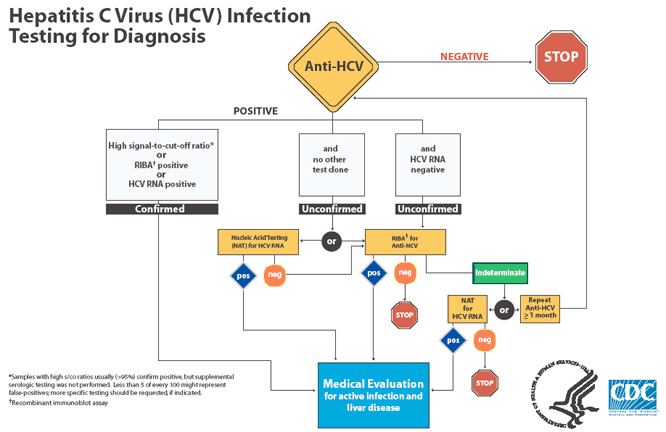
A blood test is carried out as HCV can be detected in the blood 1-3 weeks after infection and antibodies are present in detectable levels in 3-12 weeks. Incubation time periods vary between individuals. There are 5 different types of tests that are carried out either individually to assess a particular component or used in conjunction with each other to give a more comprehensive overview. They can conclude whether the sample has been exposed to and / or infected with hepatitis C response to treatment:
Anti-HCV test – designed to identify antibodies against HCV which signifies exposure to the virus. It cannot be used to tell if there is still an active form of the infection or if the antibodies detected are part of a previous immune response.
HCV RIBA test – also detects antibodies of the hepatitis C virus. Used to confirm results of anti-HCV tests ie exposure to HCV.
HCV-RNA test – looks for the presence of the virus in the blood thus determining if HCV is an active infection. HCV-RNA is an early indicator of hepatitis C and can be detected 1-2 weeks after infection. It is commonly used to monitor the effectiveness of treatment.
Viral load or quantitative HCV tests – assess the quantity of viral RNA particles present in blood. This type of test is used to gauge patient response to treatment by comparing results obtained before and during recovery.
Viral genotyping – establishes the genotype of the HCV to determine the nature of treatment. Each of the 6 major strains of HCV react differently to treatment and so by determining which particular genotype is present, the best course of therapy can be prescribed.
Liver function test – biochemical assays of liver products to determine functionality, cellular integrity and the state of the biliary tract. It is an indirect measurement of liver damage.
Hepatocellular carcinoma: Image courtesy of en.wikipedia.org/wiki/File:Hepatocellular_carcinoma_1.jpg Public domain image.
HCV testing options: Image courtesy of commons.wikimedia.org/wiki/File:HepC_graph8.png Public domain image.