
Transmission
Causes
Hepatitis C is caused by a virus (HCV) which is approximately 50nm in diameter and contains positive-sense RNA. It has a higher mutation rate than DNA viruses and there are seven different genotypes with slightly different properties, making it harder to treat. When it was first isolated in 1989 it was referred to as nonA nonB hepatitis. Now HCV has been classified as being of hepacivirus genus and in the family Flaviviridae.
Transmission
HCV is transmitted by blood-to-blood contact. The most common route of transmission was through transfusion of infected blood products before screening for HCV was implemented in 1992. Now it is thought the majority of new cases are from intravenous drug users. There are many activities and situations involving exposure of blood products which could all be potential routes of transmission for the hepatitis C virus:
Drug use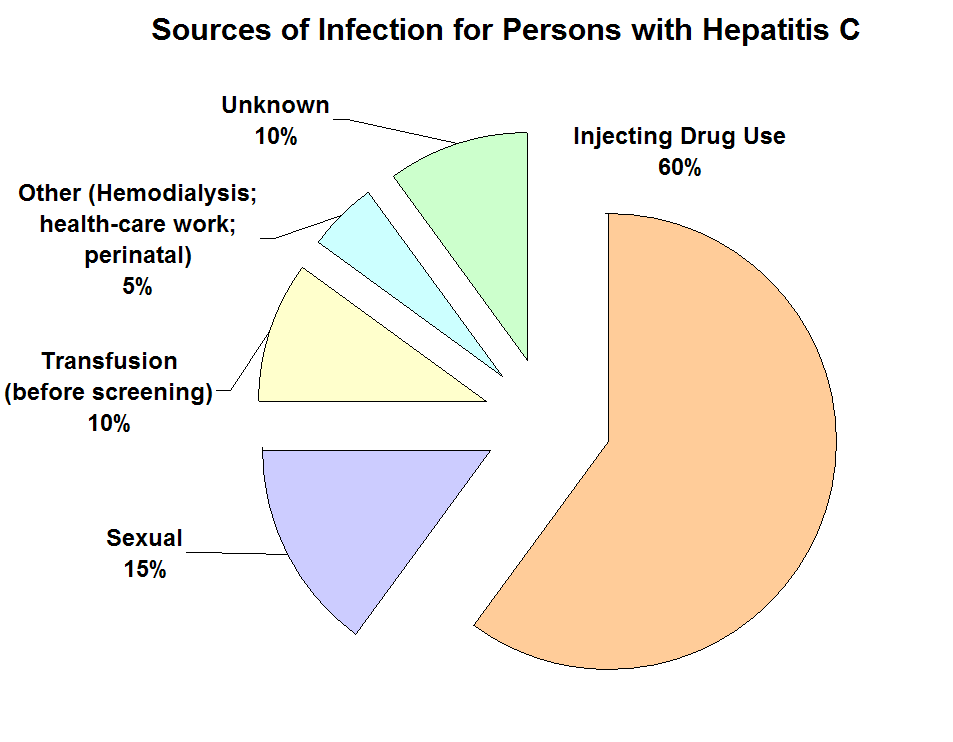
Sharing needles or other drug paraphernalia (including cookers, cotton, spoons, straws, water) puts users at risk of coming into contact with foreign blood. This is a very good method of spreading not only hepatitis C but any other infection which is found in the blood.
Blood transfusion
Recipients of blood, blood products (including clotting factors, platelets, plasma and immunoglobulin) or organ transplants were at risk of contracting HCV before a thorough screening program was implemented. Now the risk of infection is less than one per million transfused units.
Unsterilised equipment
This is particularly problematic in developing countries where medical and dental equipment is sometimes not sterilized and / or disposed of as thoroughly as it should be.
Occupational exposure
Anyone undertaking a job where accidental blood exposure is a possibility is potentially at risk of catching the virus.
Sexual transmission
This is relatively rare although certain sexual practices such as anal penetrative sex, fisting and using sex toys have a higher risk of contracting HCV associated with them.
Tattoos and body piercings
Without appropriate sterilization these are a possible method of transmitting HCV. Non-professional or underground tattoos and piercings are less likely to have been performed with fully sterilised equipment and so carry a greater hazard.
Personal items
Razors, toothbrushes, nail scissors and other personal equipment can be contaminated with blood and therefore can spread HCV.
Vertical transmission
HCV can be passed from mother to child during labor. This occurs relatively infrequently and does not seem to be related to the type of birthing method or breastfeeding.
HCV is not spread through casual contact such as hugging, kissing, or sharing eating or cooking utensils.
Epidemiology
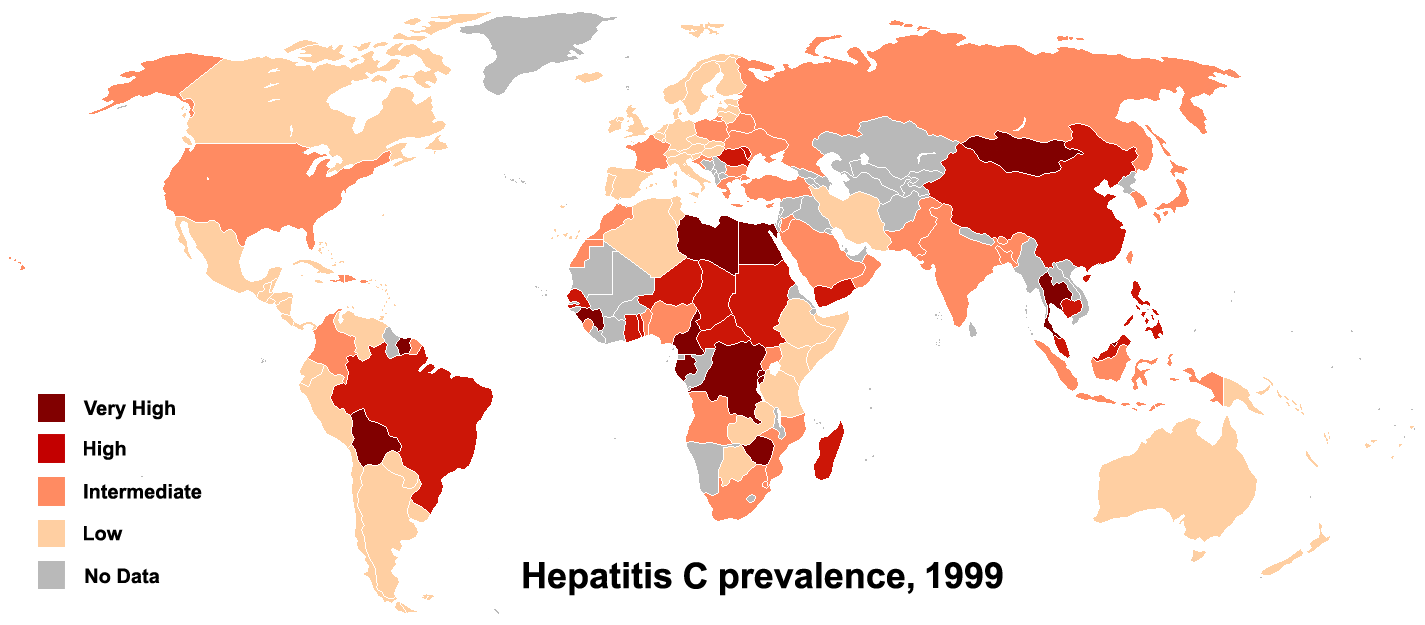 There are nearly 200 million people living with hepatitis C worldwide which amounts to 3% of the global population. However prevalence varies dramatically between countries with less than 1% of the UK population being infected compared to 10% in Egypt. This is probably due to differences in implementation of screening programs, sterilization techniques and access to knowledge and advice.
Co-infection of hepatitis C with other blood-borne diseases is not unusual. HIV is the most commonly associated disease as both viruses are blood-borne and prevalent among the same communities. Approximately 350,000 people in the USA are infected with both hepatitis C and HIV. HIV can speed up the progression of chronic hepatitis C and should be a consideration when prescribing treatment.
Pie chart of transmission: Image coutesy of https://commons.wikimedia.org/wiki/Image:Sources_of_Infection_for_Persons_with_Hepatitis_C_(CDC)_US.png This image is in the public domain and thus free of any copyright issues.
_US.png)
Hepatitis C prevalence map: Image courtesy of https://en.wikipedia.org/wiki/File:HCV_prevalence_1999.png under the terms of the GNU Free Documentation License.
